
International Students of Shanghai University Participate in Hands-on Research Program in Suzhou
A group of international students and faculty from the International Education College of Shanghai University recently took part in an innovation-oriented study trip to Suzhou. Designed to deepen entrepreneurial education and industry-academia collaboration, the visit offered participants a close look at the thriving innovation landscape and development momentum of the Yangtze River Delta region. The delegation toured key venues including the Shanghai University Innovation Center in Suzhou, the Artificial Intelligence Exhibition Center at Suzhou Industrial Park, and the Suzhou Industrial Park Exhibition Center. These visits provided a firsthand understanding of the science and innovation ecosystem and the real-world outcomes of university-industry integration at Shanghai University’s Suzhou branch.
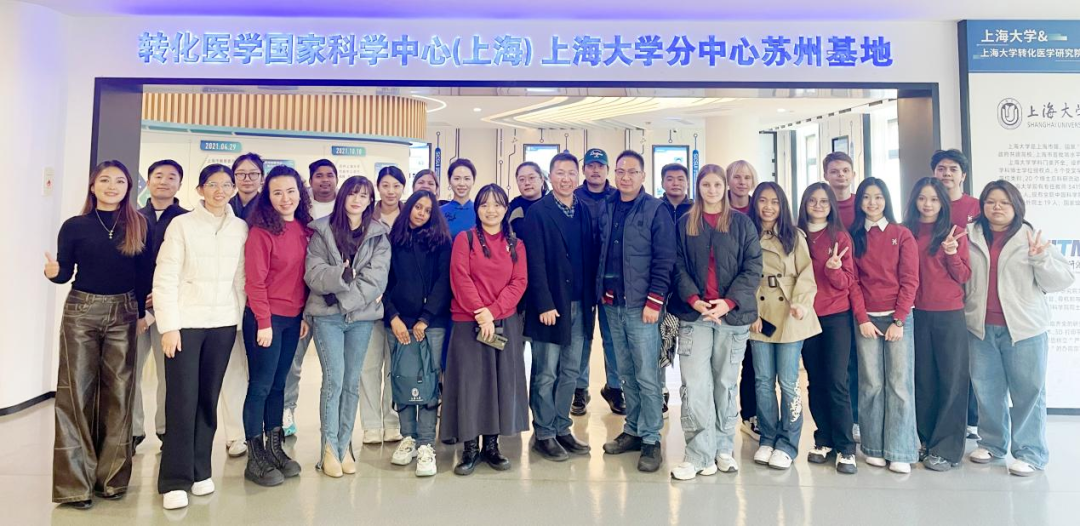
Professor Sun Baoyu, Deputy Director of the Shanghai University Translational Medicine Research Institute and Executive Deputy Director of the Shanghai University Innovation Center (Suzhou), warmly welcomed the visiting international students and faculty. He extended his sincere greetings and introduced the center’s core vision for university-local collaboration.
Mr. Zhang Xie, Deputy Director of the Business Center, provided a comprehensive overview of the innovation center’s organizational structure, development milestones, and key achievements. As a model platform for university-region collaborative innovation, the center focuses on cutting-edge fields such as artificial intelligence and new materials. It has successfully incubated multiple high-tech projects and has been recognized with several honors, including designation as a Suzhou City Industry-University-Research Collaborative Innovation Base, highlighting its outstanding performance in integrating industry, academia, and research.
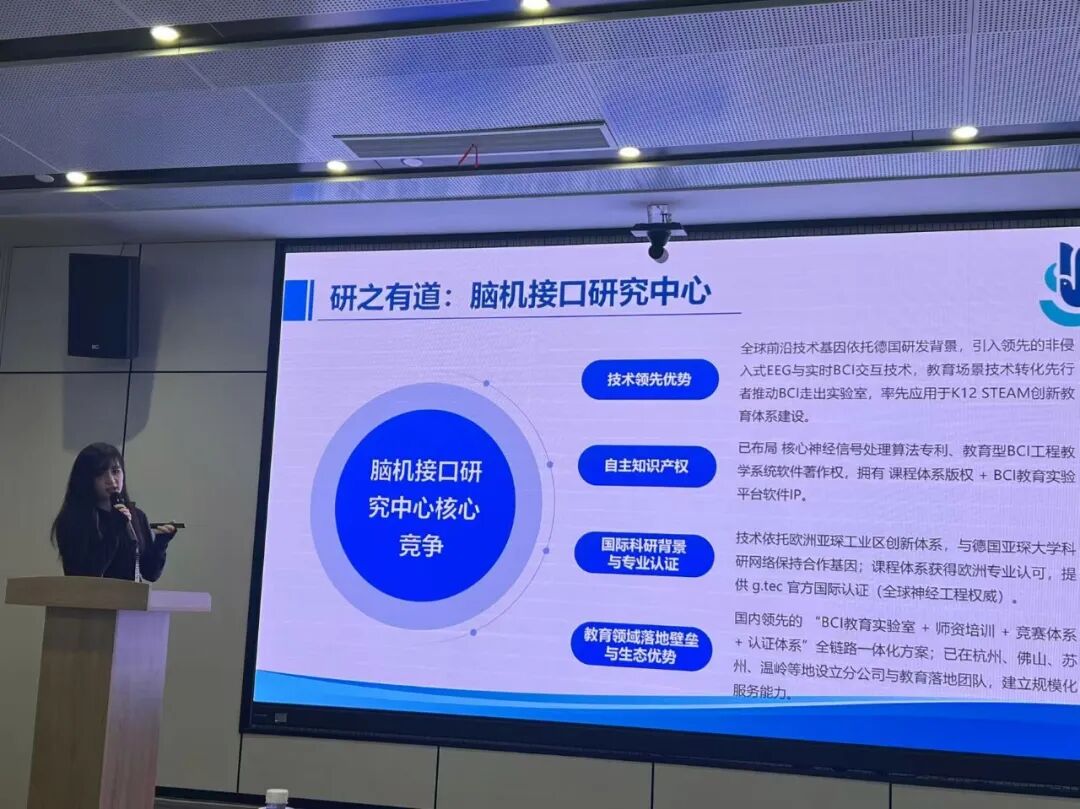
Led by Instructor Huang Jinzhi from the Shanghai University Innovation Center (Suzhou), the students and faculty observed cutting‑edge application scenarios such as intelligent robots and digital twin technology on site. This hands‑on experience allowed them to directly grasp how technological innovation drives industrial upgrading. They also explored practical cases of AI‑enabled smart city development and gained a comprehensive understanding of the regional development planning and international business environment of the Suzhou Industrial Park.

Tuguldur Arslan, an international student from the School of Economics, remarked that this visit effectively bridged theoretical discussions on innovation and entrepreneurship with real‑world industrial practice. He noted that it provided an invaluable platform for international students to access high‑quality resources and explore practical pathways, offering strong inspiration for their future endeavors in innovation and entrepreneurship.

The activity represents a key initiative by the International Education College of Shanghai University to promote innovation and entrepreneurship education for international students, as well as a dynamic practice in deepening industry-education integration and broadening the scope of talent development. By precisely connecting with the high-quality innovation resources of the Yangtze River Delta, it has not only built a practical bridge for international students and faculty to engage with cutting-edge industries and spark innovative ideas, but also—through university-region collaboration—enabled international students to experience firsthand the vibrant momentum of China's technological innovation and the open, inclusive business environment. This has laid a solid foundation for communication and exchange between Chinese and international innovators.
Moving forward, the International Education College will further develop university-enterprise collaboration in talent development. Leveraging the strengths of the Yangtze River Delta, it will continue to enhance its innovation and entrepreneurship education system, focusing on cultivating well‑rounded talents with both global competence and practical skills. This effort aims to provide sustained impetus for regional high‑quality development and international exchange and cooperation.
Source: Shanghai University